Retail Media Trends That Are Reshaping D2C Customer Engagement
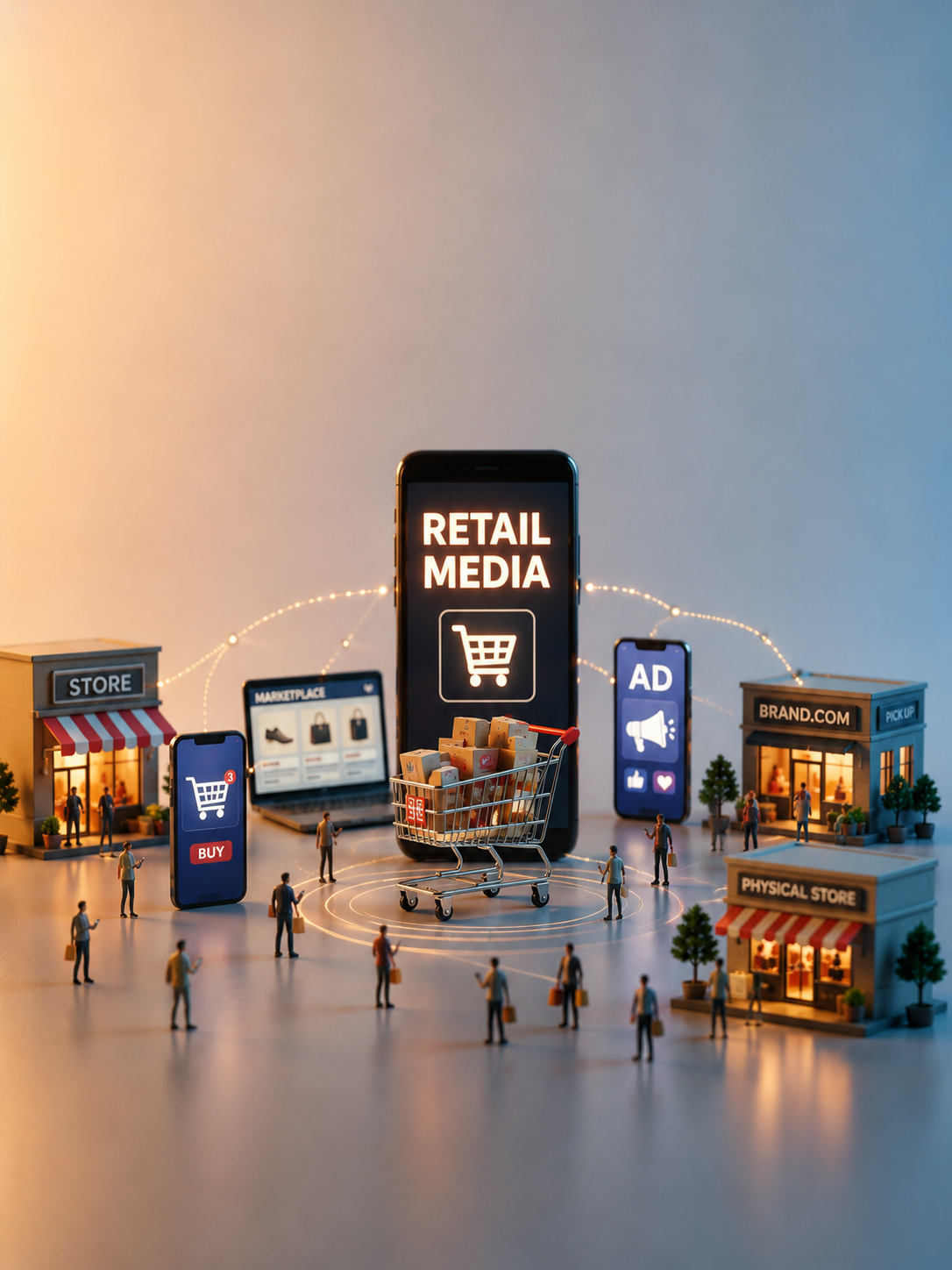
A few years ago, if someone had told me that retailers would become some of the most influential media companies in marketing, I probably would have smiled politely and changed the subject. Fast forward to today, and here we are. Retail media has gone from being an interesting addition to the marketing mix to becoming one of the biggest conversations in D2C marketing strategy.
What fascinates me isn't simply the rise of retail media itself. It's what that rise says about how customer engagement is changing. Consumers haven't become more loyal to channels; they've become loyal to convenience. They'll discover a product on social media, compare prices on a marketplace during lunch, read reviews later that evening, and finally complete the purchase in-store or through an app. Guys, that's not a complicated customer journey anymore. It's just normal.
For marketers, that changes everything. Building more campaigns isn't the answer. Building more connected experiences is.
Retail Media Is Becoming the Glue That Holds Omnichannel Marketing Together
One pattern I've noticed is that omnichannel marketing is finally growing beyond the idea of simply "being everywhere." For years, many brands treated omnichannel as a checklist. Have a website? Tick. Social media? Tick. Marketplace presence? Tick. Physical stores? Tick.
The reality is that customers don't experience brands as separate channels. They experience one journey. Retail media is helping marketers close the gaps between those touchpoints because it brings something we've all wanted for years: richer customer intelligence based on actual shopping behaviour.
That shift couldn't have come at a better time. As third-party cookies continue to disappear and privacy expectations evolve, marketers are placing far greater value on first-party data. According to the Interactive Advertising Bureau (IAB), retail media has become one of the fastest-growing digital advertising channels, largely because retailers hold high-quality purchase data that brands simply can't replicate elsewhere.
To me, that's the real story. Retail media isn't replacing traditional digital marketing. It's becoming the connective tissue between media investment and measurable business outcomes.
Customer Engagement Is Becoming Smarter Rather Than Louder
I've always believed that customers rarely reward brands for shouting the hardest. They reward brands that seem to understand them.
Retail media allows marketers to move beyond assumptions and work with signals that actually reflect buying intent. Instead of guessing who might be interested, brands can better understand purchasing frequency, category preferences, complementary products and even timing.
That changes the conversation entirely.
Personalisation becomes less about inserting someone's first name into an email and more about showing the right product at the right moment with the right message. It also creates opportunities to build loyalty because relevance tends to outperform repetition every single time.
Perhaps one of the most valuable shifts is measurement. For years, marketers have debated attribution models that often felt more like educated guesses than reliable answers. Retail media introduces far stronger closed-loop measurement by connecting advertising activity with actual purchases. According to McKinsey, retail media networks are increasingly attracting marketing budgets because they provide clearer visibility into sales outcomes than many traditional digital channels.
Vanity metrics still have their place, but I suspect most marketing leaders would rather explain revenue growth than celebrate impressive click-through rates.
The Best Omnichannel Strategies Think Like Customers
One irony I've come to appreciate is that marketers often organise around internal teams while customers organise around their own lives.
The customer doesn't wake up thinking about paid search, email marketing or ecommerce. They simply want the easiest path from interest to purchase.
That's why I believe the strongest D2C strategies increasingly focus on connected journeys rather than isolated campaigns. Retail media supports that thinking by helping brands bridge ecommerce, marketplaces, mobile experiences, social commerce and even physical stores with greater consistency.
Interestingly, Deloitte has observed that consumers now expect seamless interactions across digital and physical environments, making integrated customer experiences a competitive advantage rather than a nice-to-have.
That expectation isn't likely to disappear. If anything, it's becoming the new baseline.
Of Course Retail Media Isn't Without Challenges
Now, before we all start moving every advertising budget into retail media, it's worth acknowledging that the landscape is far from simple.
Retail media networks continue to multiply, each with different platforms, reporting standards and measurement frameworks. That's fantastic for innovation, but it also introduces fragmentation. Marketers can quickly find themselves comparing metrics that don't quite speak the same language.
Data silos remain another hurdle. Valuable customer insights often sit inside separate retailer ecosystems, making it harder to build one complete customer view.
Then comes the budget conversation, which, if we're being honest, tends to be where marketing meetings become particularly interesting. Deciding how much investment should shift from paid search, paid social or display advertising isn't always straightforward. The smartest organisations aren't asking which channel wins. They're asking how every channel contributes to the customer journey.
What I Think High Performing Marketing Teams Will Do Next
Looking ahead, I don't think successful marketers will treat retail media as another specialist discipline sitting quietly beside search or social.
Instead, they'll weave it into broader marketing strategy.
They'll organise around customer journeys instead of platforms. They'll strengthen first-party data strategies while encouraging closer collaboration between marketing, ecommerce and sales teams. Most importantly, they'll measure success by customer value over time rather than short-term campaign performance.
Retail media isn't changing because technology is evolving. It's changing because customer behaviour already has.
Final Words
Retail media is reshaping D2C customer engagement in ways that go far beyond advertising. It's encouraging marketers to think less about channels and far more about connected experiences, customer intelligence and measurable business outcomes.
For me, that's the exciting part. The brands that stand out over the next few years won't necessarily be the ones spending the most on retail media. They'll be the ones using it to understand customers better, remove friction across every touchpoint and build experiences that feel genuinely connected from discovery to purchase.
If you're exploring this space and want to hear from someone who has been at the forefront of retail media's evolution, I highly recommend listening to my conversation with Anders Hjorth, Retail Media Consultant at EPAM Systems. We discuss his journey from the early days of SEO in Europe to becoming a recognised thought leader in retail media, while exploring the differences between North American and European retail media landscapes, the realities of international marketing strategies and practical insights that brands can apply as this rapidly evolving space continues to mature.